My instruments
Cross Check runs on five instruments. I built each one myself. Their questions, scales and rules are fixed before an engagement starts and don't change during one. That's what keeps my judgement honest, and the results comparable from one engagement to the next.
The drawings are illustrative. No client, no real numbers.
Step 01 · Understand
Discovery Guide
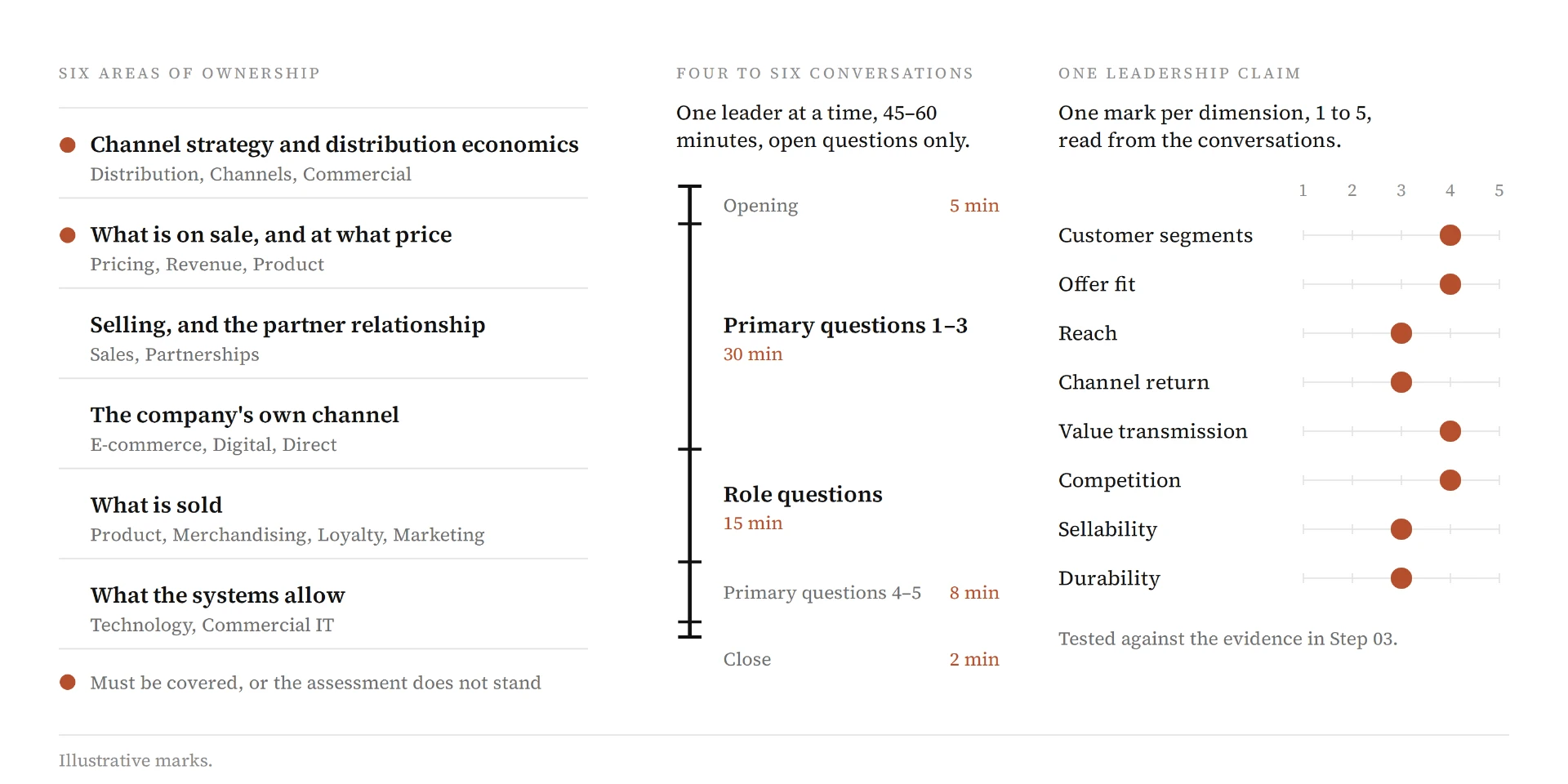
Before I ask anyone else, I ask your leadership team. Four to six conversations, one person at a time, an hour at most, open questions only. I don't ask for facts and figures, I can find those myself. I ask who your company is built for, what makes it different, and where it disagrees with itself. Then I turn the answers into one mark per dimension: your leadership's view of the company, written down so it can be tested. Nobody sees those marks until the evidence is in.
Step 02 · Listen
Interview Kit
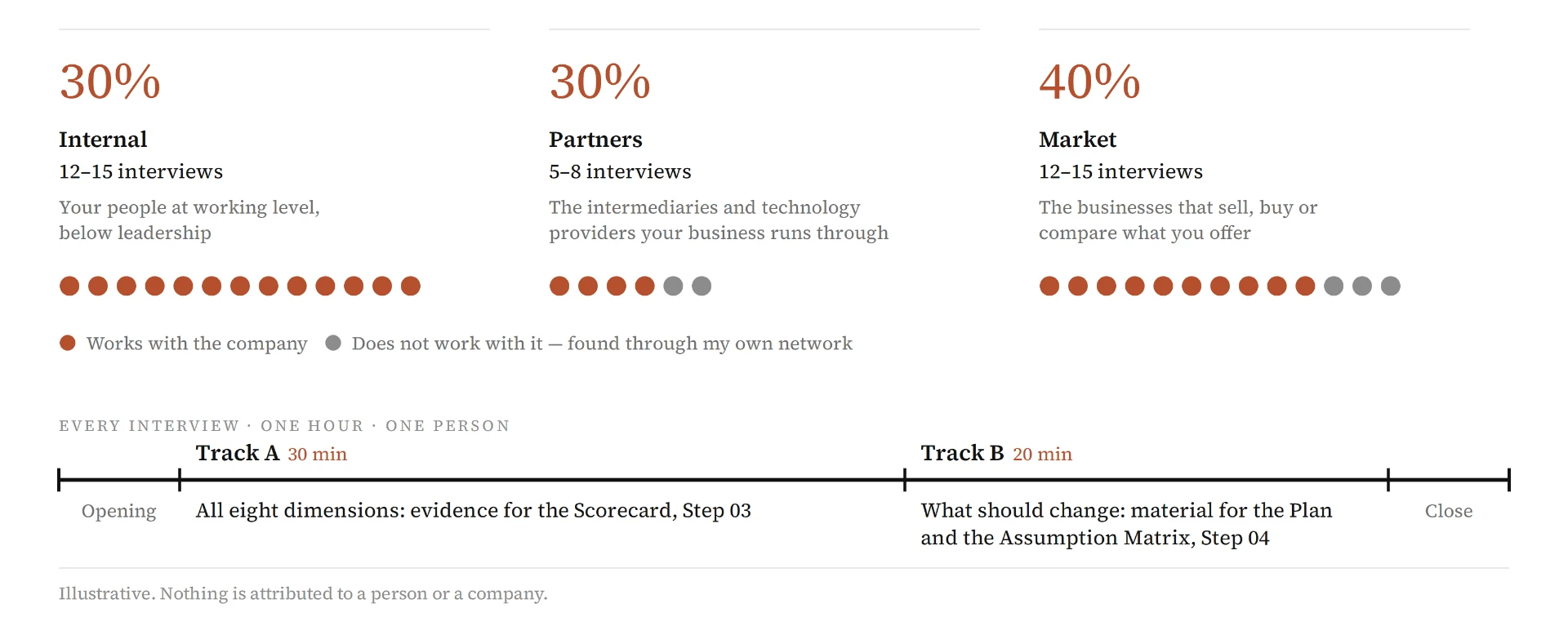
Then I ask everybody else. Thirty-odd one-hour interviews across three groups: your own people below leadership, the partners your business runs through, and the market that sells, buys or compares what you offer. That includes people who have chosen not to work with you, found through my own network. Every interview covers the same eight dimensions, then asks what you should change. Nobody hears what leadership said, and nothing is attributed to a person or a company.
Step 03 · Assess
Positioning Scorecard
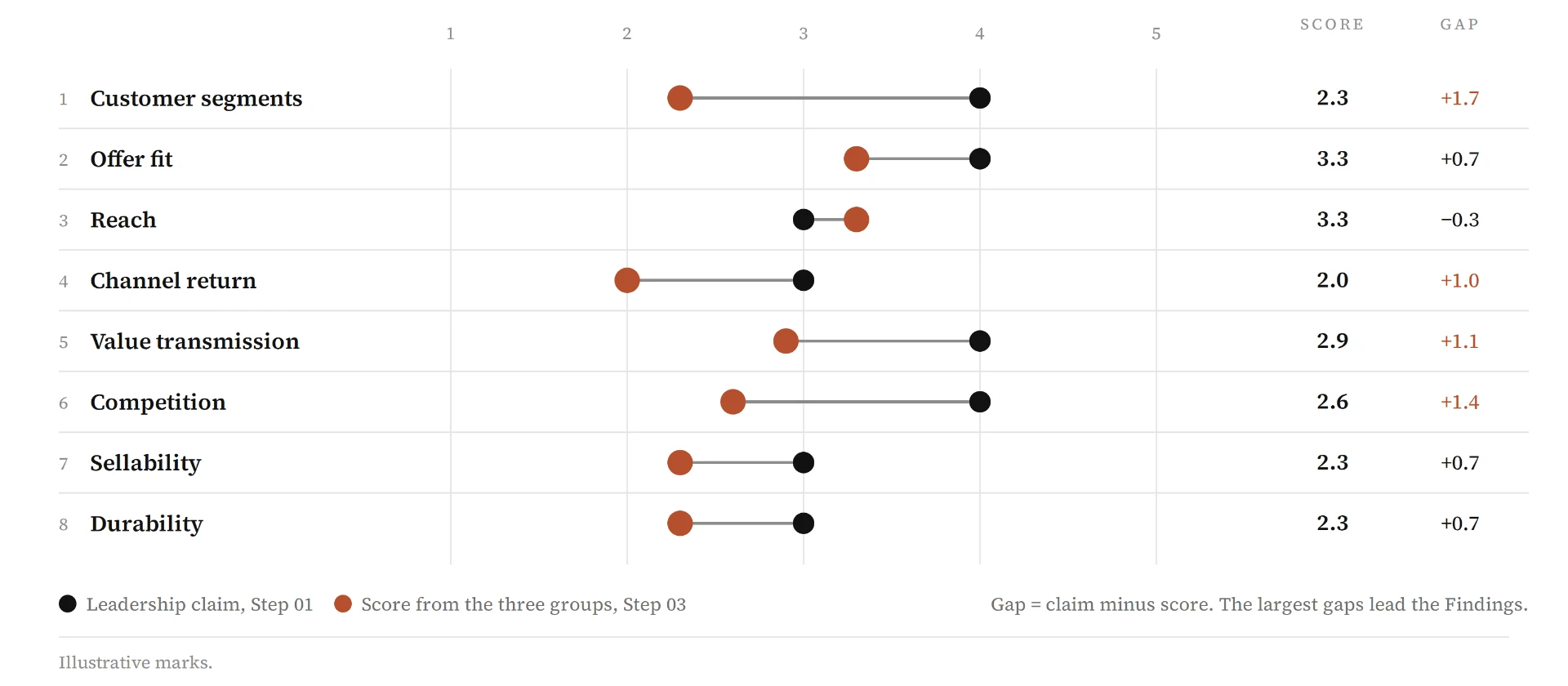
This is where the evidence gets a number. Eight dimensions, from who you are actually for to how ready you are for the way your customers will buy next. Each gets a mark from 1 to 5, against descriptions written before the work starts and never changed during it. I give the marks, not the people I interviewed. Then I set them against what leadership believed in Step 01. The distance between the two is one of the most useful things you'll read.
Step 04 · Choose
Value Curve Library
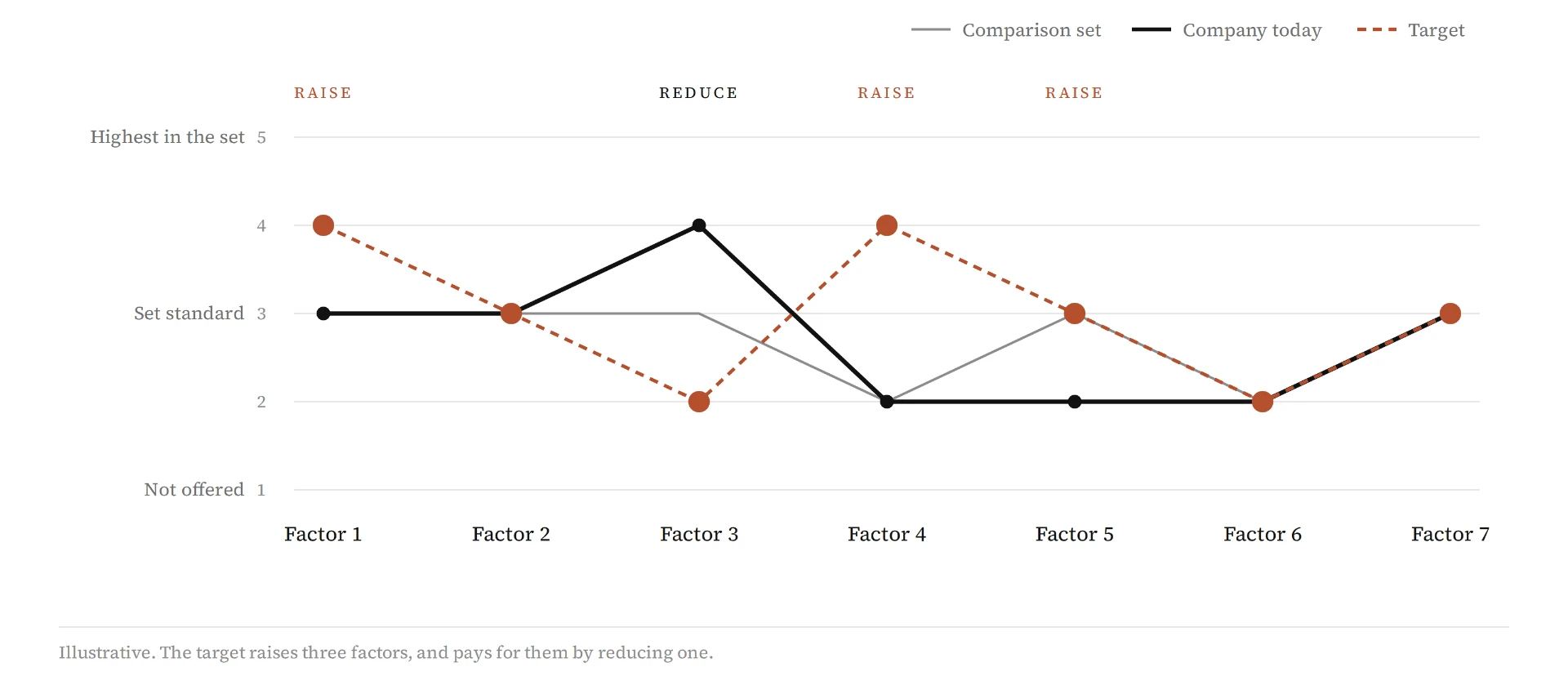
A strategy worth having looks different on paper. I draw your company against the competitors your market actually compares you with, not the list you'd give me, on a fixed set of factors from product fit to price position. Then I draw where you should be instead: stronger on the few things your market values most, and paying for it by doing less of something it values less. If your line ends up sitting on top of everybody else's, there's nothing to differentiate your company.
Step 04 · Choose
Assumption Matrix
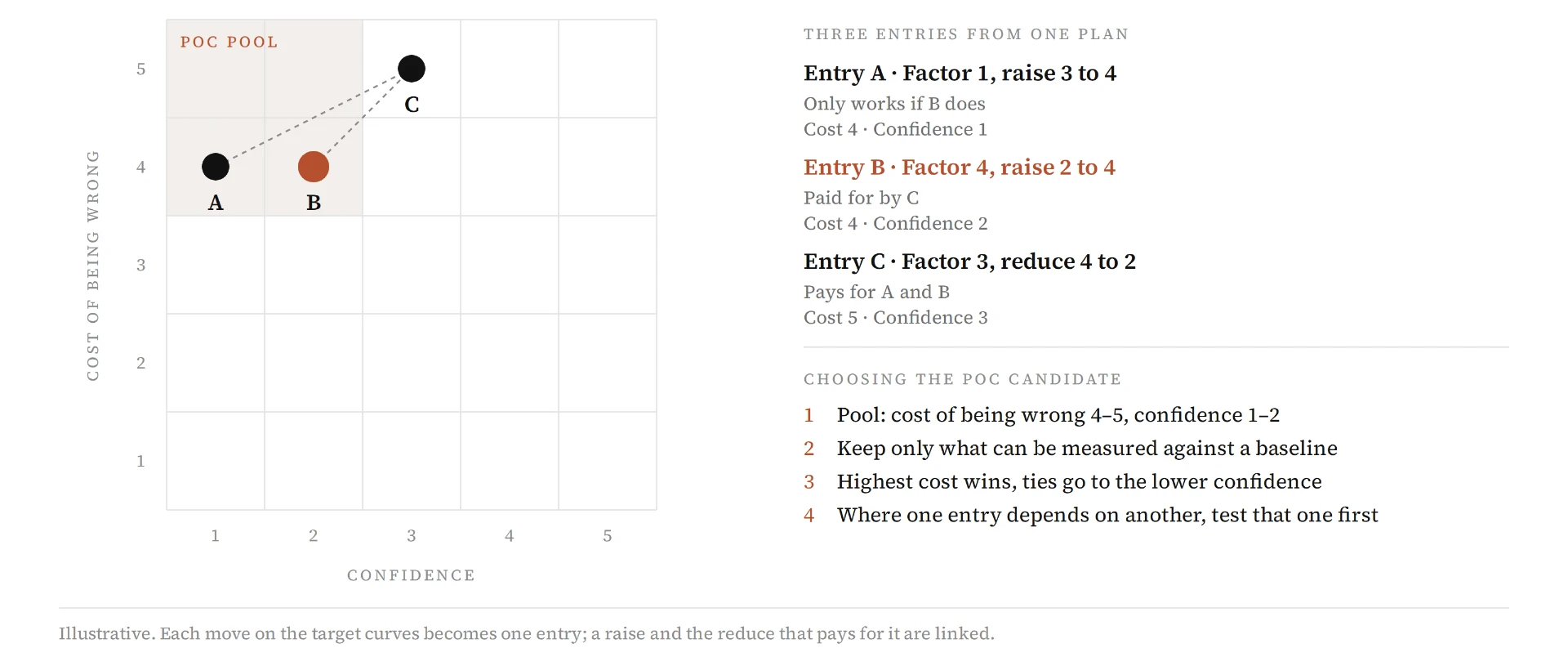
Every plan rests on things nobody has proven yet. So every move in the plan becomes one assumption: if we do this, that will happen. Each gets two marks, what it costs you if it turns out wrong and how much evidence supports it. The riskiest one that can actually be measured becomes the proof of concept in Step 05. You get an honest account of what's unproven, and a clear answer to what to test first.
The instruments stay with me. What they find about your company is yours.
Get in touchspingaud@gmail.com copied